Basement Finishing After Underpinning, Done Right
Have you ever walked into a newly renovated lower level, only to bump your head on a random duct? That frustration usually happens because the structural team and the finishing crew never coordinate.
We design the finished layout well before the first shovel hits the dirt. This early planning means your bathroom rough-ins, kitchenette location, and beam pockets sit exactly where they need to be for maximum ceiling height.
Toronto Basement Underpinning is dedicated to providing superior structural solutions for homeowners seeking to maximize their property’s potential.
Every inch of your new height gain should serve a purpose.
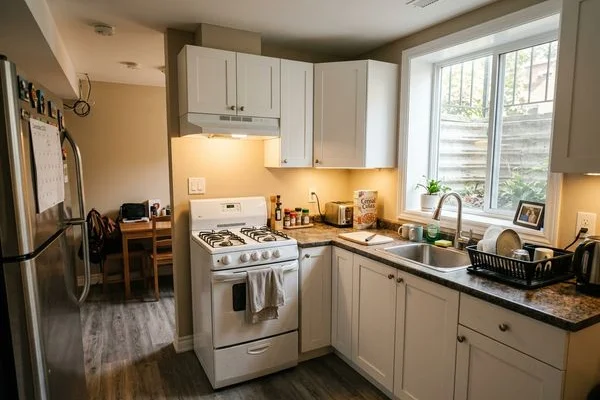
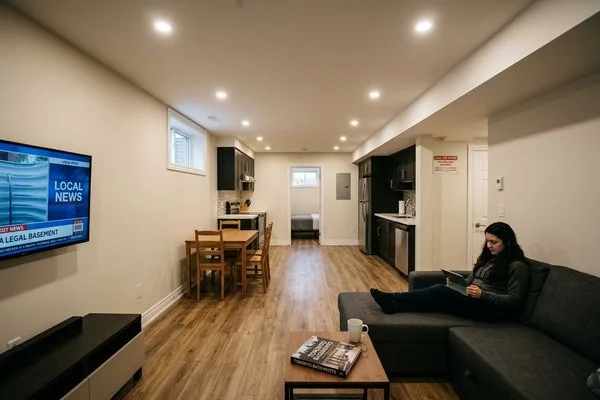
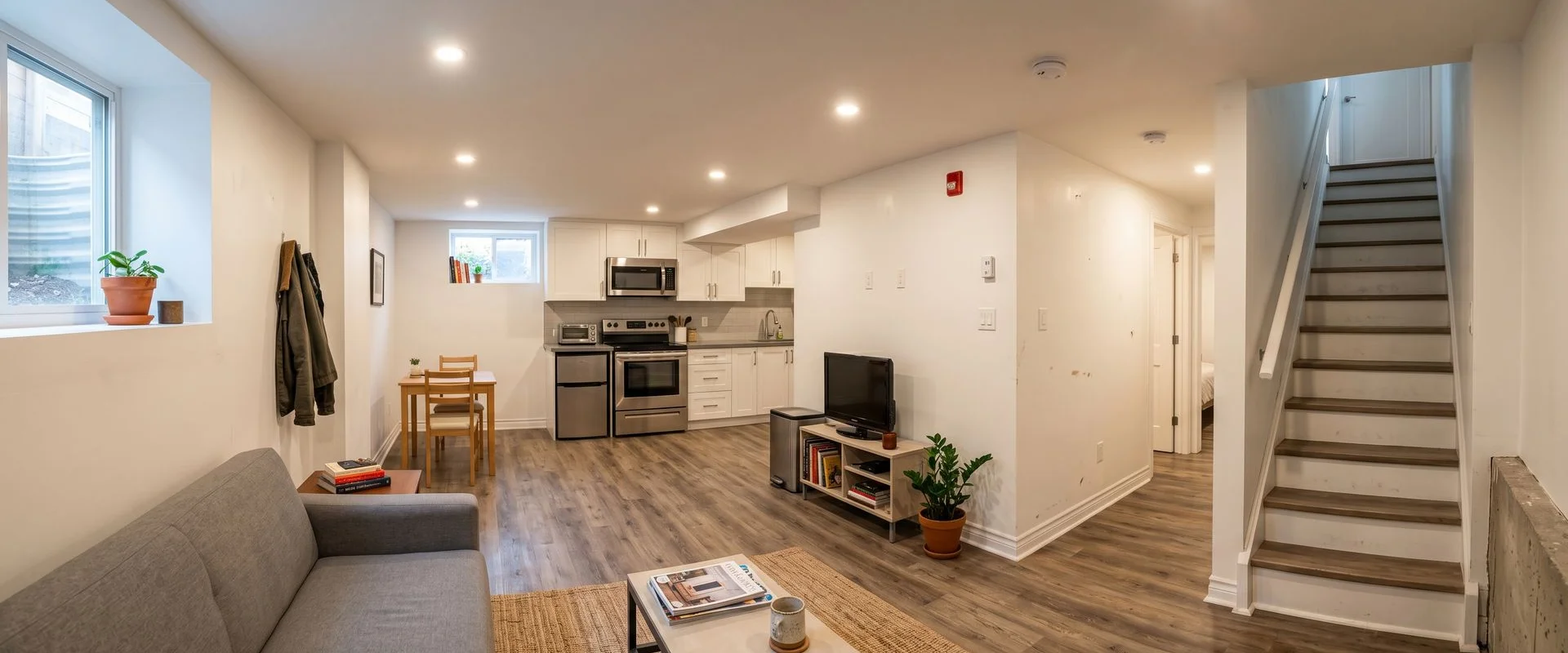
You can easily turn that excavated space into a stunning legal basement apartment or a private luxury suite.
Legal Basement Apartments (OBC 9.36 Compliance)
Building a code-compliant secondary unit in Toronto means satisfying very specific local rules. Rental income makes this investment highly attractive right now.
A 2026 report from Door Insight shows that median asking rent for a one-bedroom unit in Toronto sits around $2,150 per month. Our crew engineers your space to meet all municipal requirements from the initial structural drawings forward.
You avoid the headache of dealing with the City of Toronto ePlans digital portal. Wait times for a clean residential permit submission currently run between 6 and 12 weeks.
We handle that entire secondary-suite registration process as a standard step in your project.
| Requirement | Code Standard |
|---|---|
| Ceiling height | 6’5” minimum habitable (8 ft preferred for ROI) |
| Egress | Bedroom window must allow escape (size + sill height rules) |
| Fire separation | 30-minute fire-rated drywall on resilient channels between units |
| Smoke alarms | Interconnected upstairs and down, hardwired with battery backup |
| Separate entrance | Most cases require an exterior entrance separate from the main unit |
| Registration | City of Toronto Secondary Suite Bylaw registration |
Luxury Finishing: Theatres, Wine Cellars, Gyms
Homeowners in Forest Hill, the Kingsway, and high-end Mississauga neighbourhoods frequently pair their structural projects with premium upgrades. You need specialized materials to make these high-end spaces function properly.
We coordinate directly with your interior designer, AV consultant, and custom millwork shop during the early design phase. This collaborative approach ensures every technical detail gets factored into the blueprints.
A custom wine cellar requires dedicated climate control systems and deep structural pockets for proper airflow.
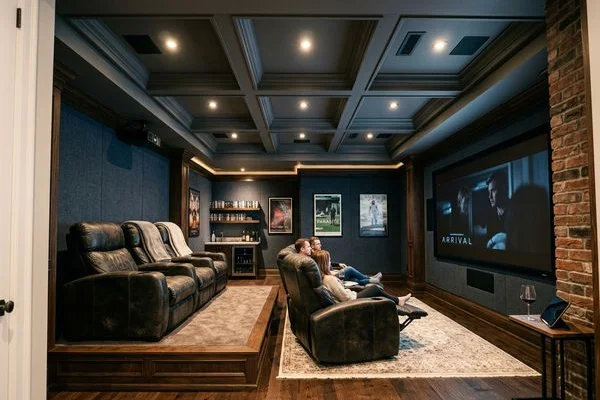
- Home theatres with riser seating, QuietRock acoustic drywall, and projector throw distance calculated for the exact finished ceiling height.
- Wine cellars featuring custom stone racks and a dedicated cooling unit.
- Home gyms built on 3/4-inch thick heavy-duty rubber subflooring to absorb deadlift shocks.
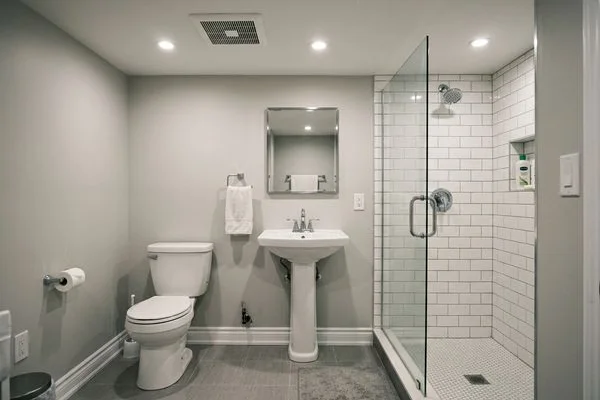
- Guest suites offering full baths, kitchenettes, and separate entrances for long-term family stays.
Typical Project Sequence
A clear timeline keeps your basement finishing project on track. The City of Toronto targets an initial permit review within 10 to 15 business days.
Real-world construction phases require careful scheduling. Our project managers keep you updated at every major milestone.
Phase 1: Planning and Structural Prep
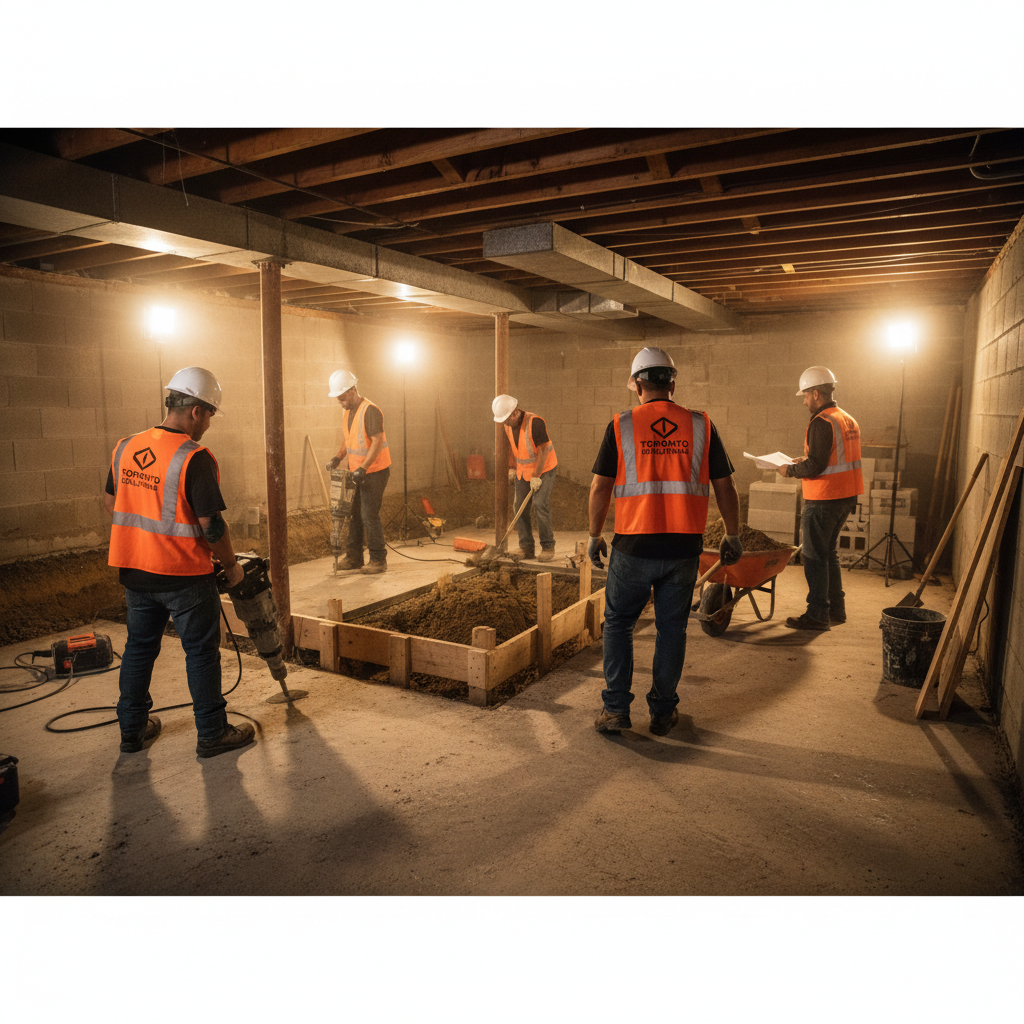
Laying the groundwork correctly prevents costly delays later. You need a cured, solid foundation before any drywall goes up.
We lock in the finished layout before any digging begins.
- Pre-underpinning design (finished layout drawn, ceiling-height target locked).
- Underpinning (see our main underpinning service page).
- Slab cure (14 to 28 days depending on ambient temperature, allowing concrete to reach structural strength).
Phase 2: Construction and Final Handover
The actual finishing work moves surprisingly fast once the foundation sets. Toronto building inspectors must sign off on the mechanical systems before the walls get closed.
Our team manages all the paperwork and site visits.
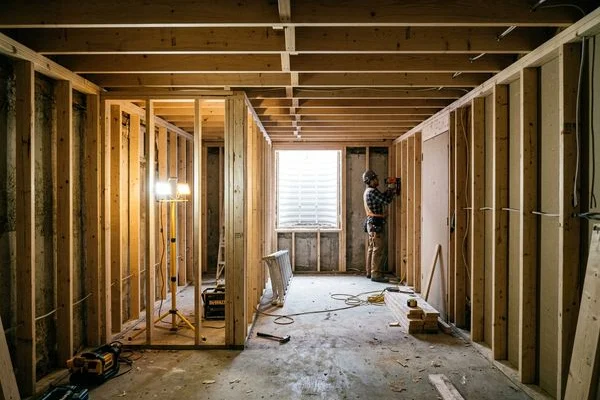
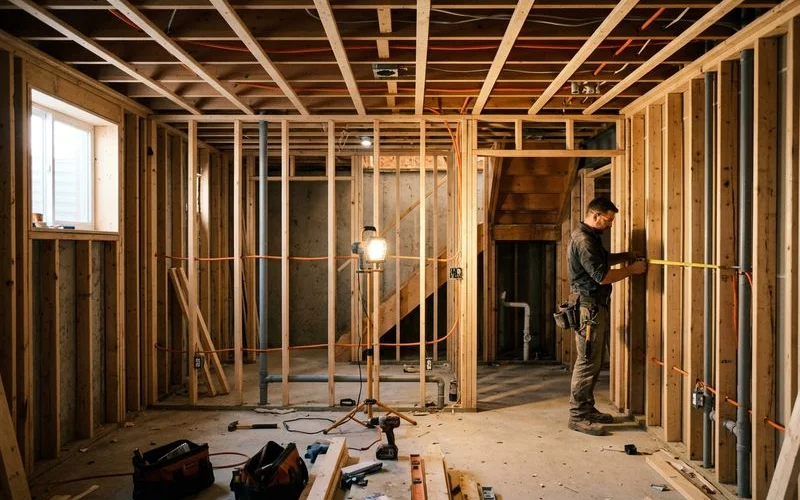
- Framing & rough-ins (2 to 3 weeks for studs, plumbing, and electrical lines).
- Municipal inspections (scheduling city officials to approve electrical, plumbing, and framing).
- Insulation, drywall, mudding (2 to 3 weeks to create the room shapes).
- Trim, flooring, fixtures (2 to 3 weeks for luxury vinyl plank and final touches).
- Final inspection & secondary-suite registration (1 week for the final sign-off).
Your total finishing phase typically takes 6 to 10 weeks from a cured slab to handover. Luxury scopes often extend the timeline to 10 or 14 weeks due to custom materials.
Pricing Tiers
Toronto basement finishing costs depend heavily on the final level of detail. Data from Senso Design in 2026 shows that standard basement renovations average between $60 and $90 per square foot across Ontario.
We provide a strict line-item breakdown so you know exactly where your budget goes. Every single figure is backed by a specific scope of work.
Our company refuses to use vague “to be determined” clauses in your quote. You deserve absolute financial clarity from day one.
| Finish Level | Typical Scope | Estimated Cost |
|---|---|---|
| Basic Legal Apartment | Drywall, vinyl plank flooring, basic kitchenette, 3-piece bath | $30,000 to $45,000 |
| Mid-Range Family Suite | Premium flooring, custom millwork, larger bath, upgraded fixtures | $45,000 to $70,000 |
| Luxury Suite | Theatre, wine cellar, gym, full secondary kitchen, premium custom millwork | $70,000 to $150,000+ |
Often Combined With
Protecting your new living area from water damage is a mandatory first step. Environment Canada recorded 2024 as the wettest year in Toronto Pearson Airport’s history. Two massive 100-year storms delivered over 1,145 millimetres of total precipitation.
We strongly recommend upgrading your drainage systems while the floor is already open. This proactive approach saves you thousands of dollars in future repairs. The City of Toronto has even poured $1.15 billion into its Basement Flooding Protection Program to combat these severe weather events.
- Interior Waterproofing is essential because most finishing projects need a guaranteed-dry envelope first.
- Sump Pumps & Battery Backups actively protect your finished space from power-out water events.
- Drawings & Permits are folded into one combined application when the finishing runs concurrently with the structural work.
- Plumbing & Drain Services make sense right now, as replacing the main drain is highly efficient while the slab remains open.
Ready to start planning your new space? Basement finishing requires a skilled team that understands Toronto building codes inside and out.
We invite you to contact our team today to schedule your structural consultation.