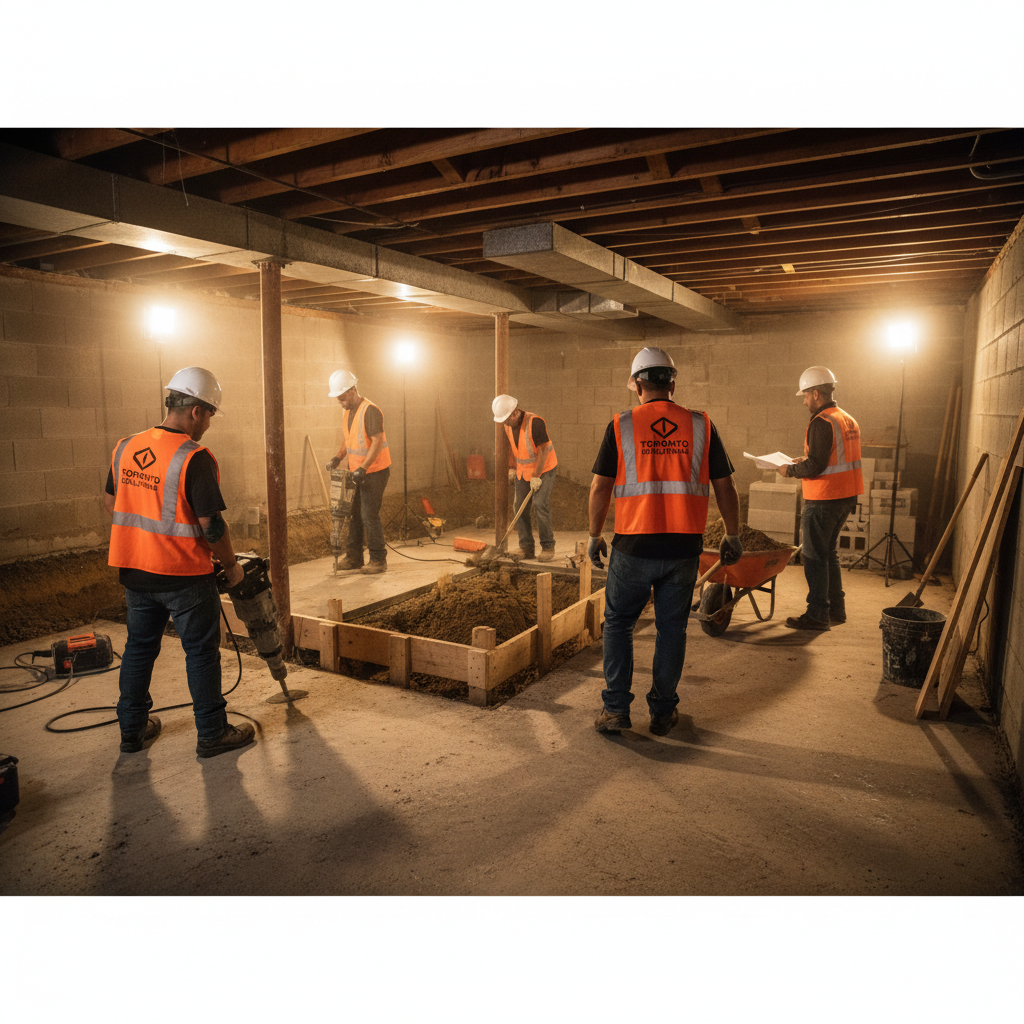
Many Toronto homeowners view their low basement ceiling as a permanent frustration. If you find yourself asking what is basement underpinning, we know it is actually a massive structural opportunity waiting to be realized.
Recent real estate data shows that an 8-foot finished basement can boost a home’s value by up to 30 percent. That return makes the initial excavation a highly strategic investment.
We provide superior structural solutions at Toronto Basement Underpinning to help you maximize your property’s potential. Let’s get basement underpinning explained clearly, covering what the city requires and how you can safely transform your lower level.
What Is Basement Underpinning?
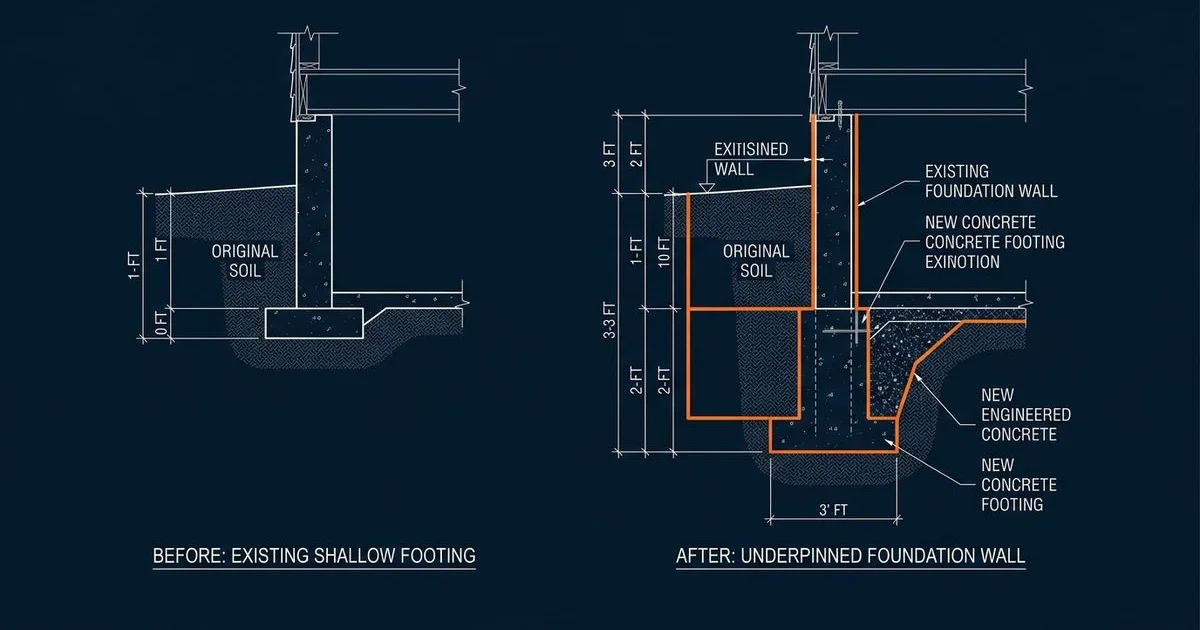
Basement underpinning is a highly controlled structural technique. It extends a home’s foundation footings deeper into the ground in a staged sequence.
This process allows the basement floor to be safely lowered without compromising the building above. The original Toronto Victorian or post-war home was built on footings sized for a very specific, shallow depth.
We find that the only safe way to gain ceiling height is to first extend those footings down to the new target depth. The whole floor needs to drop to make the space usable.
The sequence of this work is absolutely critical. Our team never digs out the entire perimeter at once to pour new concrete. That reckless approach would leave the entire home completely unsupported.
Instead, the true underpinning meaning involves excavating short, calculated segments.
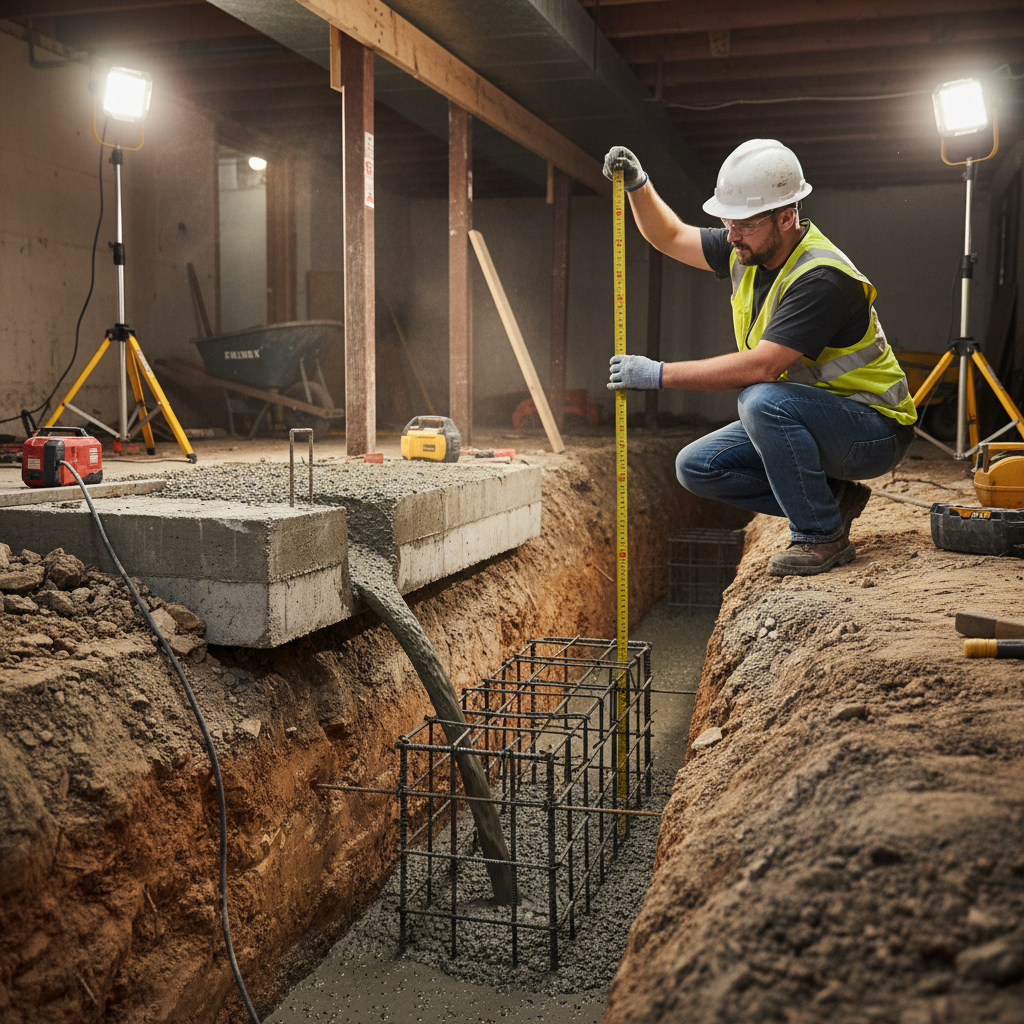
- Targeted Excavation: Crews dig out small pin sections, typically 3 to 4 feet wide.
- Sequential Pouring: A new mass-concrete footing is poured under one specific section.
- Curing Time: The concrete must fully cure before anyone moves to the next adjacent pin.
- Constant Support: The house remains securely supported on existing footings while the new sections harden.
Every single step requires engineering approval and a stamp from an Ontario-licensed structural engineer. Heavy clay soils are incredibly common in areas like Scarborough and North York.
This clay expands heavily when wet and shrinks when dry, meaning precision is mandatory to prevent future shifting.
For a fuller breakdown of who actually needs this work, see the signs you need basement underpinning.
Underpinning vs Lowering The Floor
Lowering the floor simply digs out the existing slab, while underpinning safely extends the structural footings first. Contractors often confuse these two terms, and that mix-up matters because the final costs are vastly different.
Lowering the floor alone means digging out the existing concrete slab and re-pouring it deeper. This approach completely ignores extending the footings. It sounds simpler and cheaper at first glance.
The reality is structurally unsound. We see the consequences of this mistake all the time. The existing foundation footings end up sitting above the new floor level with nothing supporting their bearing pressure on the soil below.
The walls will eventually settle, crack, and fail entirely. No structural engineer in Toronto will sign off on lowering a slab without properly extending the footings.
Underpinning followed by lowering the floor is the required, correct sequence. The structural footings must be extended first.
The cosmetic step of digging out and re-pouring the slab to match the new depth happens second. Both actions occur in the same project. The underpinning is what makes the space safe, and the new slab pour is what makes it usable.
The Bench Footing Alternative
Homeowners often ask about basement benching as a budget-friendly option. A contractor builds a concrete “bench” around the inside perimeter of the existing foundation walls instead of digging underneath them.
We suggest reviewing the numbers before making a decision. Benching typically costs between $45,000 and $80,000, while a full underpinning project ranges from $80 to $500 per linear foot.
You save money with benching, but you lose significant square footage because that concrete ledge eats into your usable floor space.
| Method | Average Toronto Cost | Usable Floor Space | Structural Safety |
|---|---|---|---|
| Full Underpinning | $80 - $500 per linear foot | Maximum edge-to-edge space | Fully engineered extension |
| Basement Benching | $45,000 - $80,000 total | Reduced by the interior bench | Safe, avoids under-digging |
| Just Lowering Slab | Cheap but illegal | Full space | Severe risk of collapse |
Why Footings Get Extended
Three specific reasons drive almost all foundation extension projects in the Greater Toronto Area.
- Ceiling height for code compliance. Section 9.5.3.1 of the Ontario Building Code requires finished basements to have a minimum ceiling height of 6 feet 11 inches (2.1 meters) over at least 75 percent of the floor area. Most pre-1980 Toronto homes feature 6-foot 4-inch ceilings. Extending the footings creates a code-compliant living space, generating great rental income as a legal basement apartment.
- Structural depth on shallow original footings. Older properties frequently sit on rubble foundations barely 12 to 24 inches below grade. Current city codes demand footings sit below the local Toronto frost line, which is roughly 4 feet (1.2 meters) deep. Underpinning brings the home up to modern standards and prevents dangerous frost heave.
- Bearing failure on settled footings. Heavy clay soils across the GTA expand and contract drastically with seasonal moisture. This constant movement often causes active foundation settlement. We recommend an engineered structural fix to provide deeper bearing stability when this failure occurs.
When Toronto Homeowners Need It
This structural work is the right answer when your basement is genuinely under the legal height code. It is also required when a legal rental suite is the primary goal or when active settlement requires deeper bearing capacity.
You do not need this extensive excavation for basic cosmetic remodeling. A homeowner can completely finish a 7-foot 6-inch basement without digging down.
Our specialists see many people assume they need a massive excavation for minor issues. Avoid full excavation if you only have the following specific issues.
- Minor cracking: Use a simple polyurethane injection for single foundation cracks.
- Water seepage: Install proper interior waterproofing for moisture-only problems.
If you feel unsure about which scope fits your specific situation, the smartest next step is booking an engineered site visit. The resulting engineer’s report identifies the factual problem and proposes the exact fix needed.
This professional documentation prevents unscrupulous contractors from padding the project scope.
How To Get An Honest Assessment
Toronto property owners typically gather two to three estimates before booking a major foundation project. We strongly recommend this exact approach.
You must ask very specific questions during every single estimate to protect yourself.
- Do they include a fully engineered site visit before issuing a quote? (We do.)
- Do they have an in-house relationship with a structural engineer, or do they subcontract that critical work out? (An in-house connection is faster and prevents dangerous communication gaps.)
- Will they cover the cost of the required building permits? (Toronto permits range from $2,000 to $3,000, and quotes should be clear about who pays.)
- Will they honestly tell you when excavation is not needed?
Ready for an honest assessment to find out what is basement underpinning going to look like for your home? Request a free estimate today.
Our typical response time is two business hours.