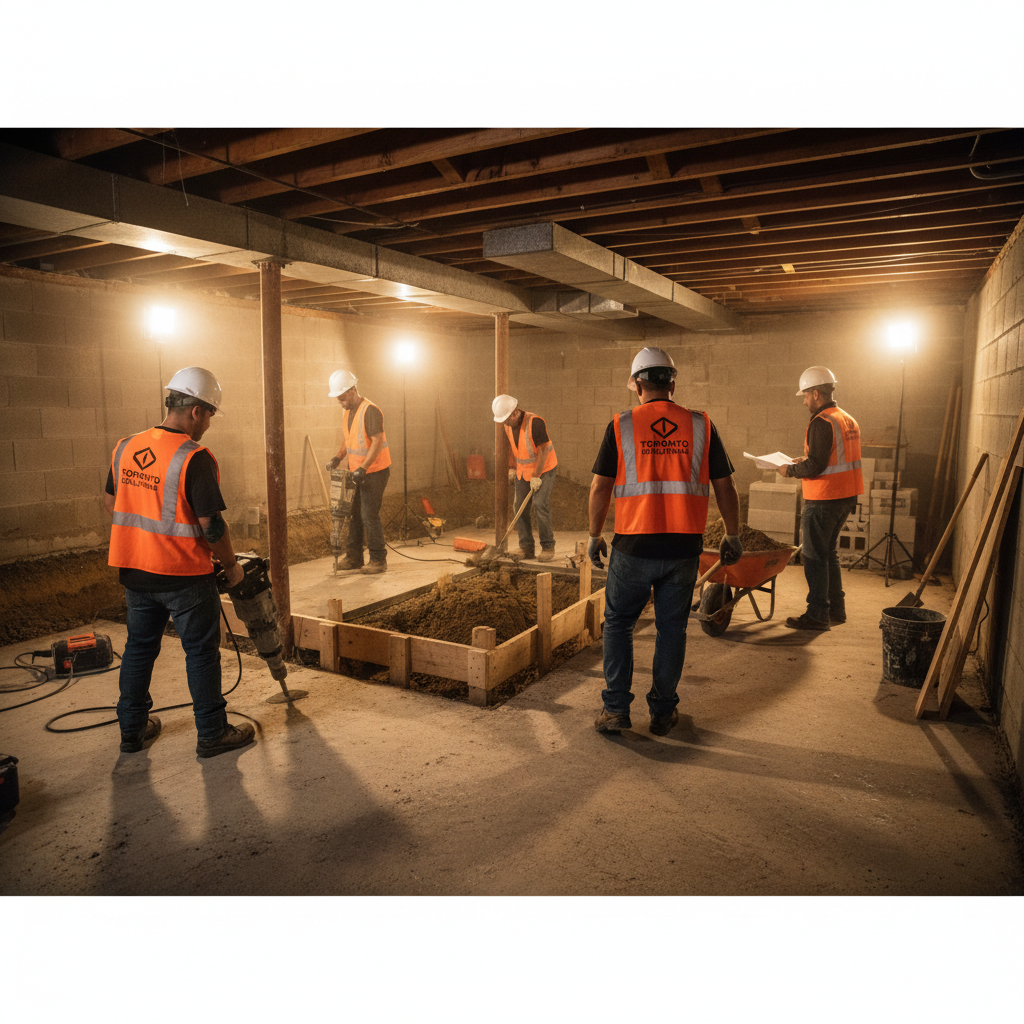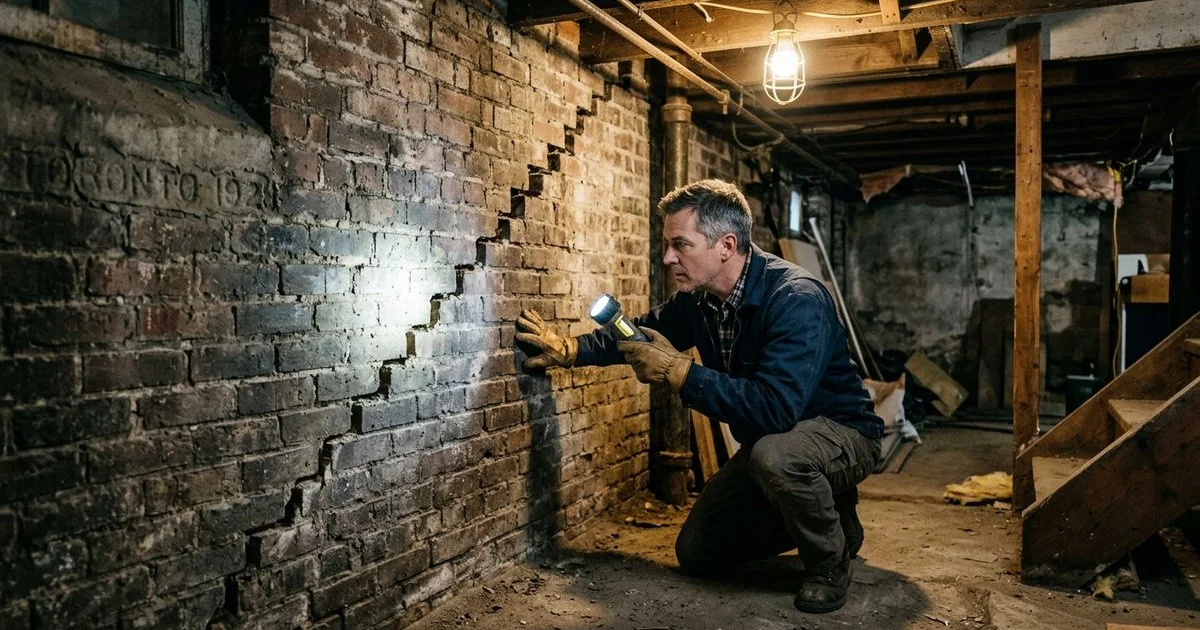
Many property owners notice a low ceiling or a sticking door and assume they face a minor cosmetic repair. The truth is that these seemingly small details are often signs you need basement underpinning or major structural support. We know that diagnosing the exact cause requires evaluating the physical evidence alongside local building regulations.
Here are ten specific indicators to help you determine if basement underpinning is the correct structural solution before you start scheduling estimates.
1. Your Basement Ceiling Is Under 7 Feet
Our crews regularly inspect older properties where the clearance barely reaches six feet. This restricted height creates a cramped feeling and violates building codes for habitable living space. Most Toronto pre-1980 homes sit at 6 feet 4 inches to 6 feet 10 inches original.
You need usable height after framing, drywall, and flooring are installed. We often see homeowners surprised by how much vertical space modern finishes consume. Underpinning the foundation is one of the most reliable low basement ceiling solutions to gain back this critical volume.
The structural work to lower a basement typically runs between $50 and $75 per square foot for a standard depth increase. Custom builders recommend planning your heights carefully:
- Habitable rooms (OBC Minimum): 7 feet 6 inches.
- Finished basements (OBC Minimum): 6 feet 11 inches.
- Modern custom basements: 8 to 9 feet.
2. You’re Planning A Legal Basement Apartment
Creating a rental unit requires strict adherence to provincial safety standards. Ontario Building Code Section 9.36 mandates a minimum ceiling height of 1.95 metres, or 6 feet 5 inches, across the required floor area. This rule applies to both living spaces and exit paths.
We find that subflooring, insulation, and bulky ductwork quickly erase your available headroom. A structural ceiling of at least 7 feet 6 inches is typically necessary to land safely at the finished minimum height. You cannot legally rent out the space if you fail to meet this metric.
Our team guides many investors through the permit process for these secondary suites. You will need underpinning to pass inspection and secure your permit if your current basement falls short.
Here are the basic sizing requirements for a legal suite in 2026:
- Minimum bachelor size: 145 square feet.
- Permit costs: $2,000 to $4,500 in Toronto.
- Ceiling drop limit: 1.85 metres allowed only under structural beams and ducts.
3. Recurring Foundation Cracks Despite Repairs
Many homeowners patch the same concrete crack multiple times with epoxy, only to watch it split open again by spring. These recurring fissures signal active structural movement rather than simple concrete shrinkage. Our structural specialists know that cosmetic patches cannot stop lateral soil pressure.
Hydrostatic pressure from water-saturated earth pushes against the wall and eventually breaks the surface seal. Injection on a structurally failing foundation fails within months because the true bearing problem remains ignored. We always look for the root cause of the shift before applying any waterproofing material.
Different types of cracks tell different stories about your foundation:
- Hairline cracks: Minor concrete settling that rarely requires structural repair.
- Vertical cracks: Common settlement that usually responds well to simple injection.
- Horizontal cracks: Serious damage from soil loading that requires immediate structural support.
4. Stair-Step Cracks In Brick Or Block
A stair-step crack pattern almost always points to active settlement in a specific section of the footing. Each crack jogs up and over to the next mortar joint in a distinct zigzag shape. Our experts treat cracks wider than 1/8 inch as immediate red flags.
This severe movement occurs when expansive clay soils shift or frost heave lifts the structure unevenly. See our foundation repair page for the full pattern matrix.
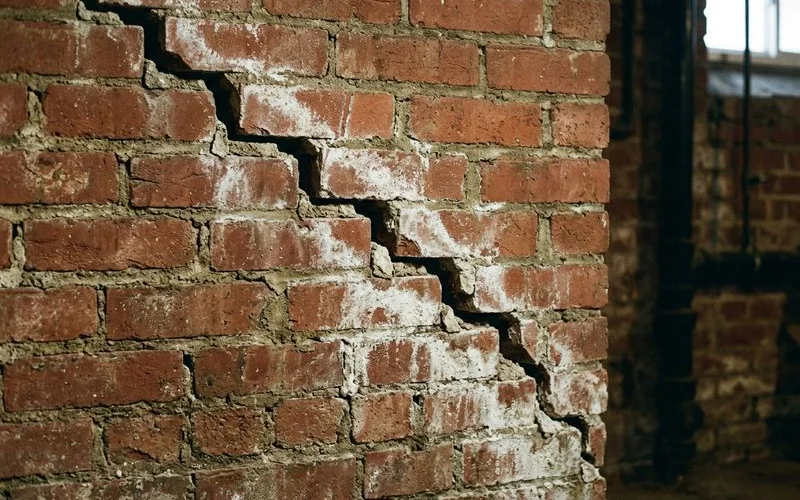
We use underpinning to extend the existing foundation down to more stable soil layers. This deep intervention stops the lateral movement and prevents the masonry from sustaining further damage. You need a permanent engineered solution when the brickwork begins physically separating.
5. Visible Settlement: Sloped Floors Or Sticking Doors
Walk around your main floor with a marble or a simple level. The home is actively settling if the floor drops more than one inch over a ten-foot span. Our foundation crews also look for upstairs doors that consistently stick at the top corner.
This localized settlement usually concentrates at one or two weak footing sections. We stabilize the house by underpinning the affected area or the full perimeter if the sinking is widespread.
6. Cracks Above Door Frames Upstairs
Drywall cracks appearing above interior door frames often originate deep underground. The foundation settles and pulls the wood framing apart, causing the rigid drywall to tear. Our team frequently traces these cosmetic wall defects straight back to a sinking basement footing.
You cannot permanently fix the drywall until you stop the ground from moving beneath the house. A licensed structural engineer can assess the structural displacement to determine if the home requires support. We highly recommend booking an inspection, which typically costs between $600 and $1,200 in the Toronto area.
The engineer will explicitly tell you if the underlying issue demands an underpinning solution. Look for these accompanying signs to confirm the cracks are structural:
- The crack returns quickly after patching and painting.
- The gap grows wider than a standard hairline fracture.
- The adjacent door binds against the floor or frame.
7. Pre-1950 Home With Shallow Rubble Or Fieldstone Foundation
Older properties in neighborhoods like the Annex, Cabbagetown, and Leslieville frequently feature rubble or fieldstone foundations. These century-old structures often rest just 18 to 30 inches below the soil surface. Our city’s modern building codes now require footings to sit well below the four-foot frost line.
These shallow masonry walls suffer heavy degradation during Toronto’s intense freeze-thaw cycles. We find that many pre-1950 foundations reach the end of their usable lifespan even without obvious visible cracking. Upgrading these delicate properties requires highly careful excavation.
Complex underpinning for fragile rubble stone can cost between $100 and $125 per square foot. The investment secures the home and prevents a catastrophic wall collapse.
Here is why older rubble foundations fail over time:
- Mortar degradation: Century-old lime mortar turns to dust under continuous moisture exposure.
- Frost heave: Shallow footings lift and shift during deep winter freezes.
- Vibration damage: Increased modern street traffic shakes loose unstable fieldstone.
8. You Want To Add Bedrooms In The Basement
Every new bedroom built below ground requires a safe escape route in case of a fire. The Ontario Building Code mandates a compliant egress window for any sleeping area. Our contractors strictly follow Section 9.9.10.1, which outlines specific dimensions for these emergency exits.
An egress window requires a minimum unobstructed opening of 0.35 square metres, or 3.77 square feet. No single opening dimension can measure less than 380 millimetres. We often encounter basements where the ceiling is simply too low to accommodate these measurements above the ground.
Dropping the floor through underpinning creates the necessary vertical wall space for a proper casement window. You must also keep the window sill no higher than 1.5 metres from the finished floor to pass inspection.
Key facts about egress windows in 2026:
- Window style: Casement windows are highly recommended over sliding windows to maximize the clear opening.
- Hardware: The latch must open easily from the inside without special tools or keys.
- Window wells: Below-grade windows require a well with 760 millimetres of clearance to allow a person to climb out.
9. The Basement Floods Or Stays Damp Even With Sump
Persistent moisture points to a failing foundation rather than just a simple drainage glitch. Severe spring storms dump massive volumes of water that quickly saturate Toronto’s clay-heavy soils. Our local climate creates intense hydrostatic pressure that forces groundwater up through tiny cracks in your concrete slab.
The city recently expanded its Basement Flooding Protection Program to $22 billion to combat overwhelmed municipal sewers. We see perfectly good sump pumps fail to keep up when the soil saturation reaches maximum capacity. Combining underpinning with an integrated interior waterproofing membrane solves the structural weakness and the flooding simultaneously.
The dimpled drainage board channels the trapped moisture directly to the pump. Here are the clear signs that water pressure is breaching your foundation:
- White mineral deposits (efflorescence) appearing on the lower walls.
- Water pooling specifically in the center of the basement floor.
- A damp, musty odor that persists despite constant dehumidifier use.
10. The Engineer’s Assessment Confirms Bearing Failure
If you are wondering when do I need underpinning, the most definitive indicator always comes from a licensed structural engineer. Professional oversight is a legal requirement for major alterations in Toronto, rather than an optional upgrade. Our company partners with an Ontario-licensed engineer to evaluate every single site before we provide a final quote.
The engineer calculates the exact soil bearing capacity and produces stamped drawings for the city permit. We know that these essential engineering services typically cost between $2,000 and $5,000 for a standard home. The resulting report outlines the exact scope of work and clearly states if structural intervention is the right approach.
A comprehensive structural assessment will provide you with three critical pieces of information:
- The exact cause of the foundation failure or settlement.
- A customized repair plan specifying underpinning depth and methods.
- Stamped engineering drawings required to secure a municipal building permit.
You should book a formal site assessment immediately if you recognize multiple symptoms from this list.
What Each Sign Tells You
| Sign | Most Likely Diagnosis | Typical Fix |
|---|---|---|
| Ceiling under 7 ft + finishing plans | Code/comfort | Full perimeter underpinning |
| Stair-step cracks | Active settlement | Underpinning |
| Sloped floors, sticking doors | Active settlement | Underpinning |
| Single hairline crack | Concrete shrinkage | Cosmetic, leave alone |
| Single leaking vertical crack | Hydrostatic pressure | Polyurethane injection |
| Persistent dampness with working sump | Hydrostatic + drainage | Waterproofing + underpinning |
| Pre-1950 rubble foundation | At end of life | Underpinning recommended |
The Right Next Step
Moving forward requires accurate information and a professional evaluation. You should not ignore the warning signs of a shifting foundation. Our team is ready to help you secure your property and expand your living space safely.
An Ontario-licensed structural engineer attends every site assessment to ensure complete accuracy. This guarantees that your recommendation comes from a qualified expert who understands local soil conditions.
Request a free estimate today, and expect a response within two business hours.