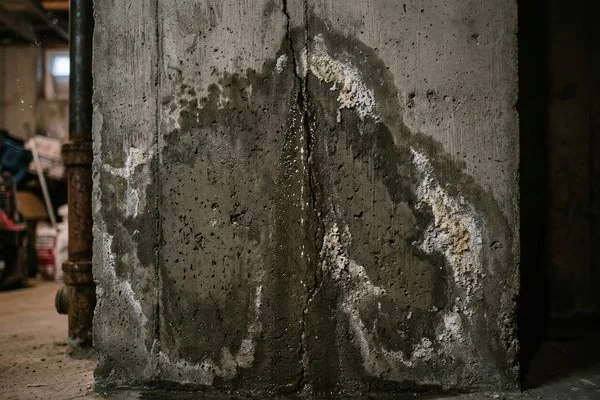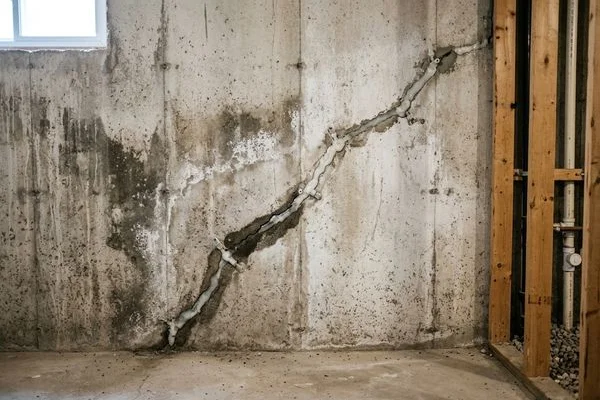
Have you noticed a new crack creeping down your basement wall? This stressful discovery often means it is time to look into Concrete & Foundation Repair.
We see these issues constantly across the city. The heavy clay soil in areas like North York and Scarborough acts like a giant sponge.
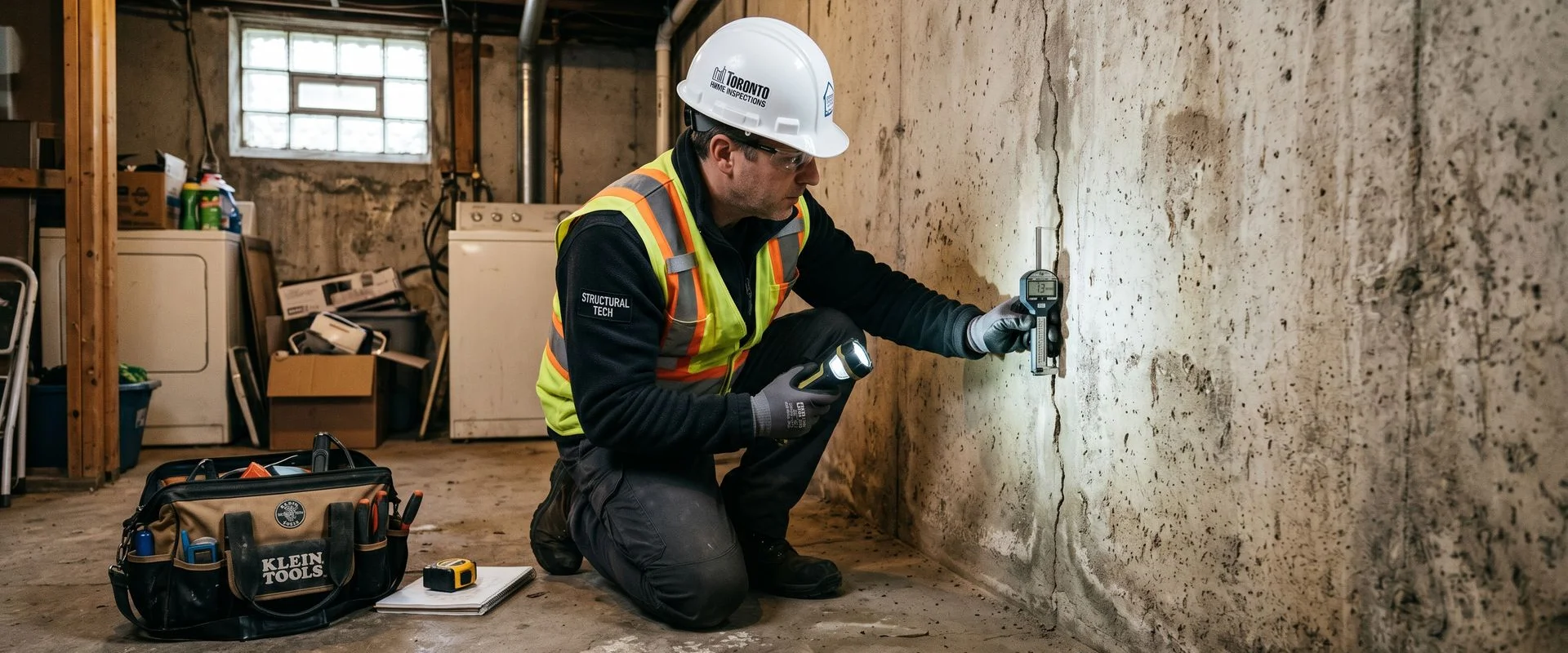
It expands when wet and puts immense pressure on your foundation. Our team starts every assessment with a professional engineer to find the real root cause. Taking a systematic approach guarantees a permanent fix.
Honest Foundation Repair, Diagnosed By An Engineer
Most foundation crack repairs sold online rely on scary photos and fixed-price injection packages. These quick fixes often come with a warranty disclaimer that voids itself the moment the crack reopens.
We know cracks reopen simply because the underlying problem was diagnosed wrong. Toronto experiences roughly 65 to 79 freeze-thaw cycles every single year.
This constant shifting means cosmetic patches will not survive the winter. Our process always starts with an Ontario-licensed structural engineer reviewing the crack pattern, soil context, and home framing before quoting a repair. The result is one of three honest, clear answers:
- Cosmetic: Leave it alone, or seal it for water if applicable.
- Repairable: Injection or localized footing reinforcement will hold.
- Structural: Only basement underpinning is a durable fix.
We do not pad the middle bucket to make extra sales. If the engineer says to leave it, that is exactly what you should do.
Zero revenue for us means a massive relief for your renovation budget.
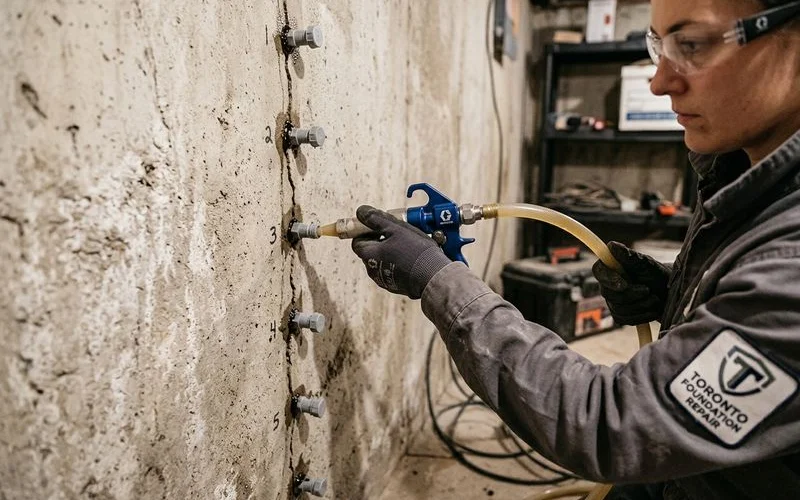
Crack Types & Repair Methods
Heavy clay soil surrounds many older Toronto properties. This dense dirt traps moisture and pushes laterally against your concrete walls.
Our engineers use a specific matrix to diagnose every crack during their site visit. Different patterns tell us a unique story about what is happening underground.
Identifying the exact cause is the only way to choose the right fix, so we follow this guide to determine the most effective strategy for your home.
| Crack Pattern | Likely Cause | Right Repair |
|---|---|---|
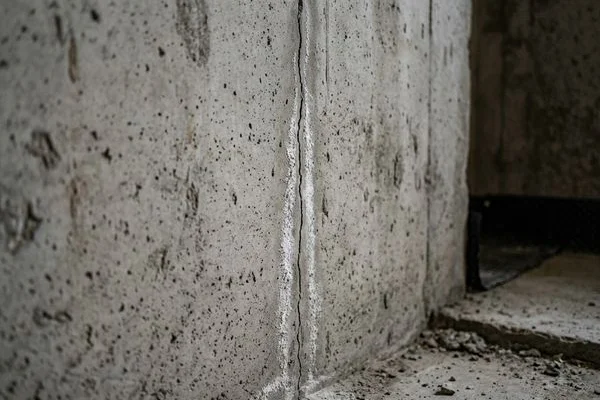
| Vertical hairline, <1/8” | Concrete shrinkage during cure | Cosmetic: usually leave alone |
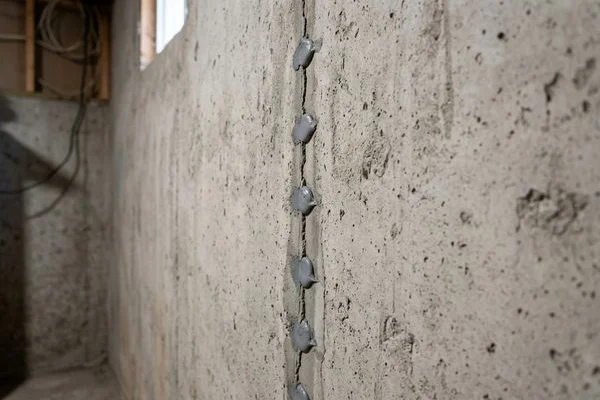
| Vertical leaking, any width | Wall flex from hydrostatic pressure | Polyurethane injection |
| Diagonal, <1/4” | Minor seasonal movement | Polyurethane injection |
| Horizontal, low on wall | Lateral soil pressure | Engineered assessment + carbon-fibre or underpinning |
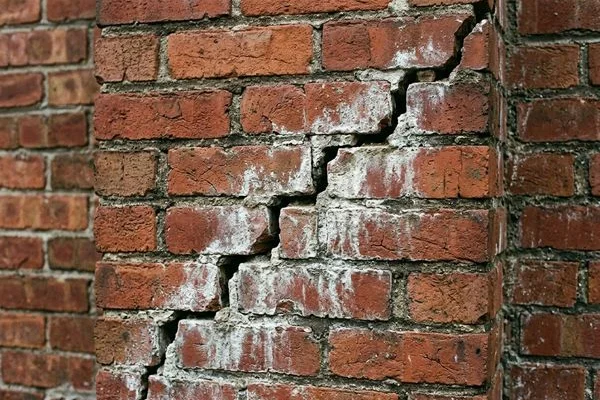
| Stair-step in brick/block | Active settlement | Underpinning: injection will fail |
| Crack with offset (lip) | Active vertical movement | Underpinning |
| Multiple aligned cracks | Bearing failure on one footing section | Footing reinforcement or underpinning |
Polyurethane vs Epoxy
Choosing the right chemistry depends entirely on what the crack is doing. Bad shops often use whichever material is cheaper or easier for them to source.
We choose the exact material based on the crack’s behavior, which is fully documented in the engineer’s report. A 2026 industry review confirmed that over 90% of residential basement leaks in the GTA are non-structural, so our technicians rely on these two specific options.
This makes flexibility the most important factor for a lasting seal.
- Polyurethane: This material stays flexible after it cures. The resin expands up to 20 times its original volume when it contacts water. It is the perfect choice for cracks that need to stay sealed against water while accommodating minor seasonal movement. Polyurethane handles most actively leaking cracks beautifully.
- Epoxy: This creates a completely rigid seal after curing. Cured epoxy boasts a tensile strength of over 7,000 PSI, which is actually much stronger than the surrounding concrete. This option is right for non-moving structural cracks where the wall’s load-bearing strength needs complete restoration. It is less common in standard residential repairs.
Footing Repair vs Underpinning
Localized Footing Adjustments
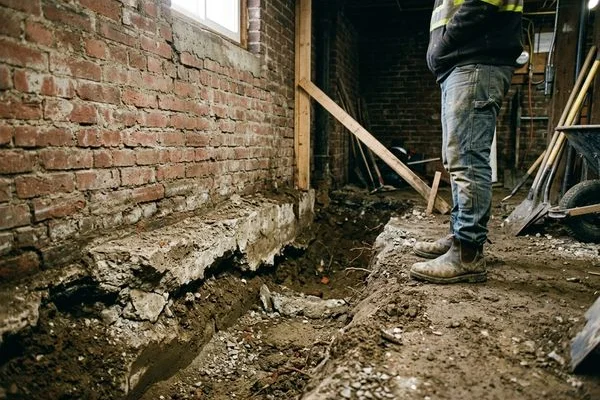
A localized footing repair extends or reinforces a single section of your foundation. This method is appropriate when the failure is isolated to one specific area.
We typically recommend this if a tree root pushed under one footing corner, or if one section was originally poured too shallow. The cost for this targeted fix ranges from $3,000 to $8,000 per affected section.
Targeting the specific failure point saves you from paying for unnecessary excavation.
Full Perimeter Underpinning
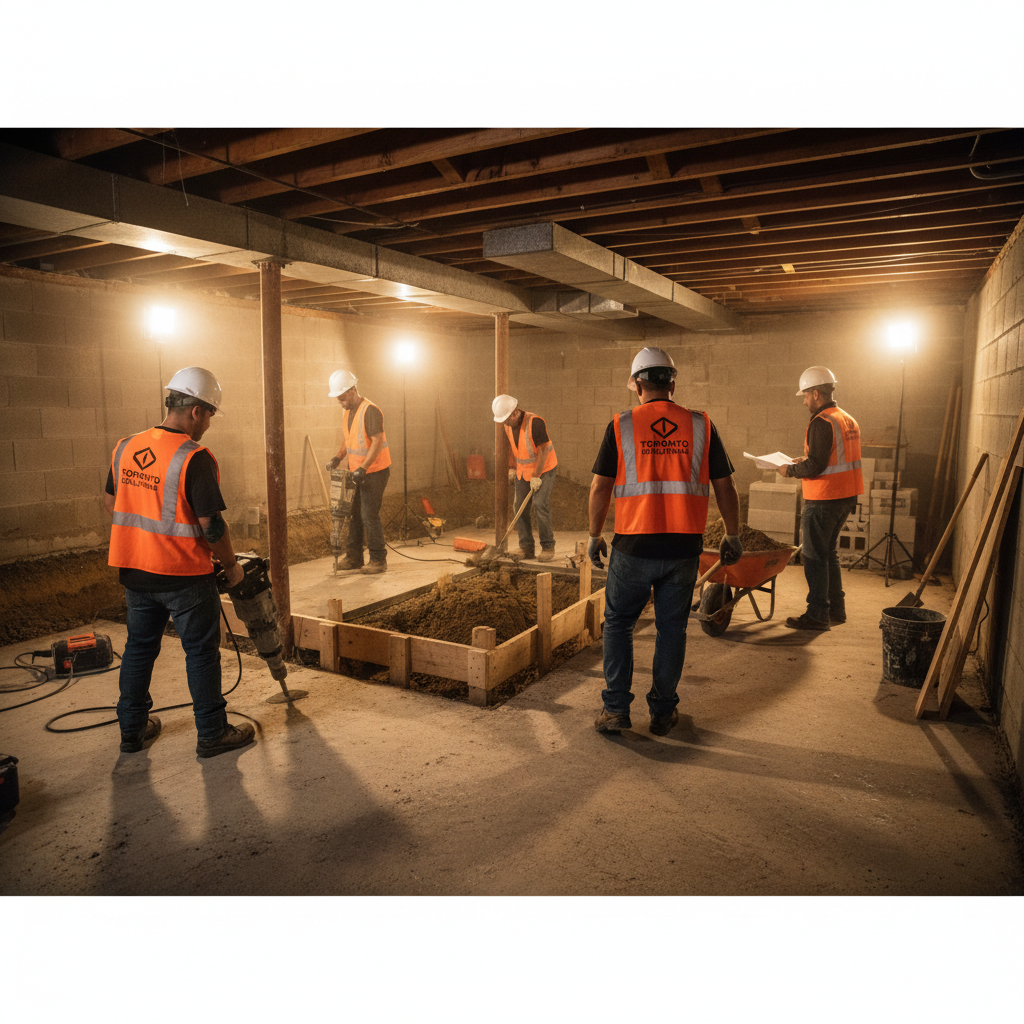
Full underpinning extends the entire perimeter footing of your house.
We see this used when the original footing is shallow across the whole home, or when bearing failure is systemic. The Ontario Building Code mandates a minimum ceiling height of 1.95 meters (6 feet 5 inches) for any legal living space.
Many homeowners choose this route when they want both structural correction and a massive ceiling-height gain in one project. Our engineer’s report always makes the final call on the necessary scope, and upselling a bigger project when a smaller one fits is never an option here.
When Combined With Other Work
Smart planning can save you a significant amount of money and time. Tackling multiple issues at once is highly efficient.
Our crews often bundle these repairs with other major basement improvements. The City of Toronto is increasing its Basement Flooding Protection Subsidy Program to a maximum of $6,650 per property starting in May 2026.
This massive grant offsets the cost of related upgrades like sump pumps and backwater valves.
- With interior waterproofing: Leaking cracks injected during a broader waterproofing scope add very minimal cost.
- With drawings & permits: Engineering reports perfectly document the structural baseline required for your official permit submission.
- With underpinning: Cracks injected before the underpinning process protect the existing wall during staged excavation.
We coordinate your crack repairs alongside these subsidized projects to maximize your investment.
Pricing Breakdown
Transparency is a core value for every single project. You should never have to guess about the financial investment required to protect your home.
We provide clear, upfront numbers to help you budget effectively. These are the current expected ranges for professional foundation work in the GTA for 2026.
- Single crack injection (cosmetic): $600 to $900 per crack
- Multiple-crack injection campaign: $2,500 to $4,500 for a typical Toronto home
- Localized footing repair: $3,000 to $8,000 per section
- Engineer-stamped structural assessment (alone, no repair): $800 to $1,500
- Full underpinning: see the main service (homepage)
The engineer’s assessment cost folds directly into any subsequent repair scope.
This policy guarantees no double-billing for your project. We want you to feel completely confident in your home’s safety and your financial decision.
Let’s Protect Your Home
Ignoring a shifting foundation will only lead to more expensive problems down the road.
We are ready to han