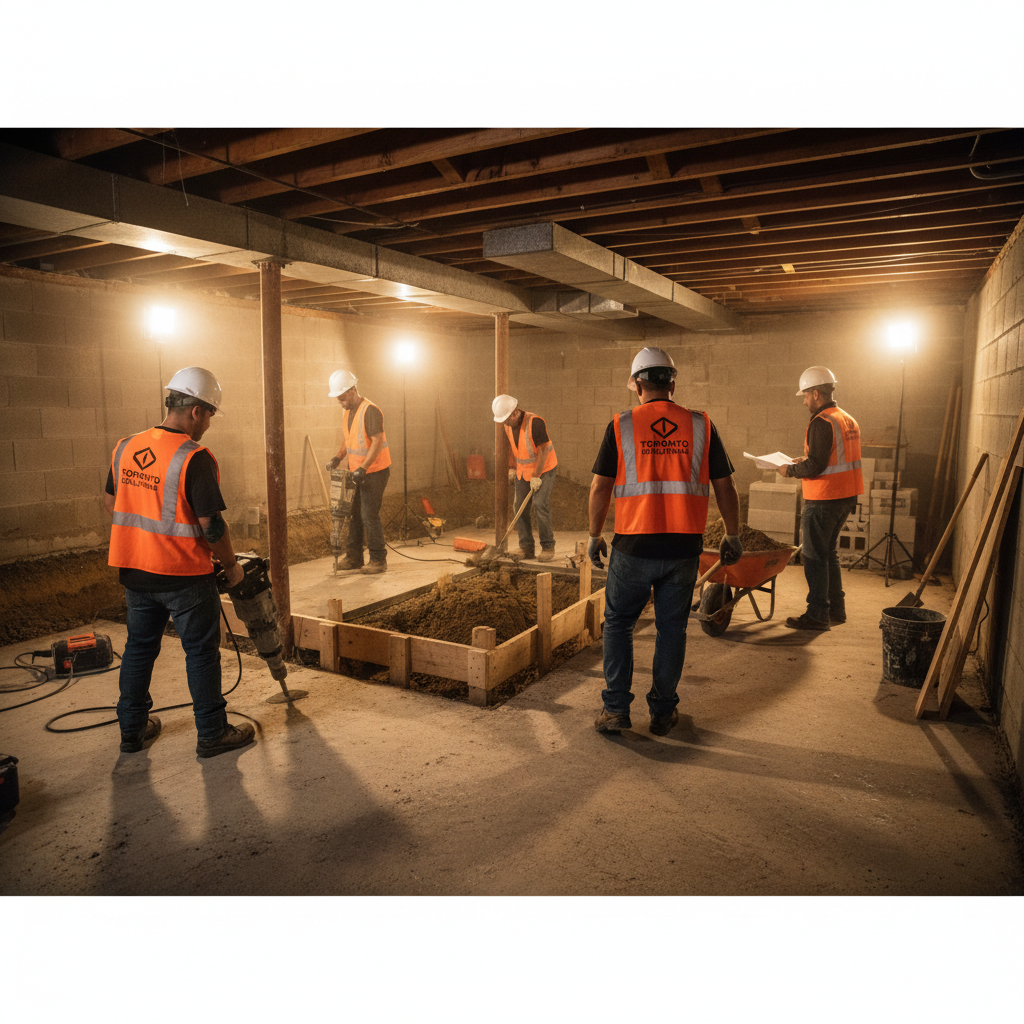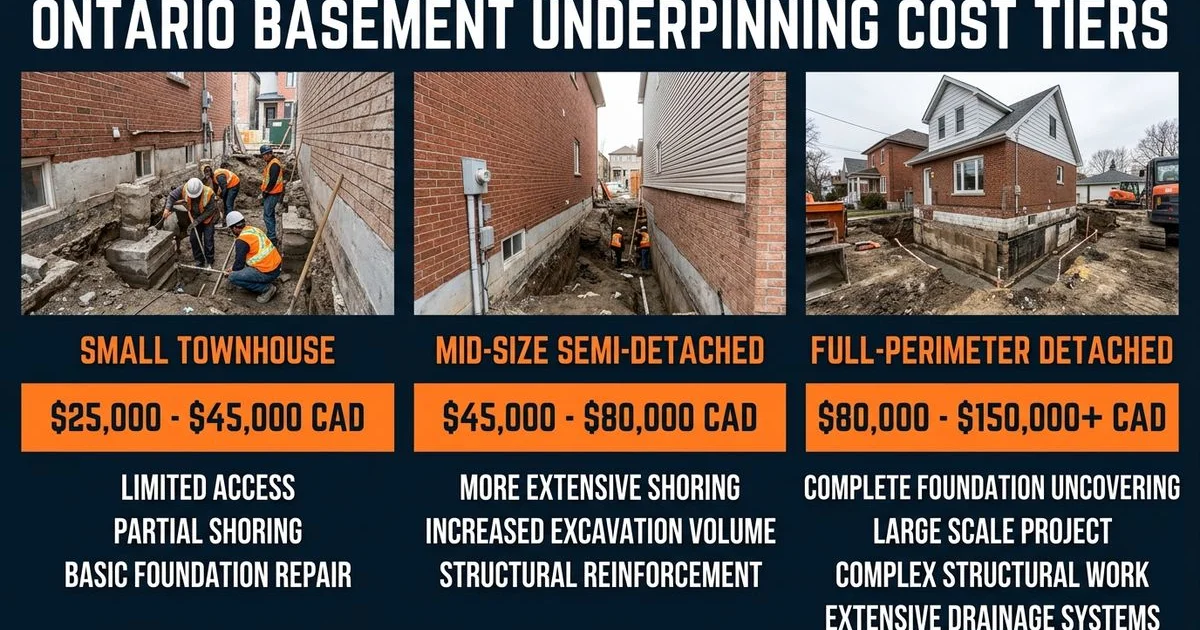
Basement underpinning in Ontario costs $80 to $500 per linear foot, with most Toronto projects totalling $20,000 to $50,000 for a standard detached home. Five factors drive 90% of the variance: depth gained, soil conditions, lot access, perimeter length, and whether waterproofing or finishing is bundled. This guide breaks down real 2026 pricing for each so you can evaluate quotes accurately before calling a contractor.
Honest Provincial Pricing
Underpinning a standard basement in Ontario currently costs between $80 and $500 per linear foot. Toronto and the Greater Toronto Area dominate this market, so most pricing data reflects GTA conditions. Outside the GTA, expect pricing roughly 10 to 20 percent lower in cities like London, Hamilton, or Kingston where labour costs sit lower. Pricing is similar in Ottawa.
The provincial range you will see across reputable contractors:
| Project Type | Linear-Foot Rate | Typical Total |
|---|---|---|
| Bungalow, 1-2 ft depth gain, easy access | $80-$200 / linear ft | $15,000-$30,000 |
| Standard detached, 2 ft depth gain, typical access | $200-$300 / linear ft | $25,000-$45,000 |
| Older Victorian, 2-3 ft depth gain, narrow lot | $300-$450 / linear ft | $35,000-$65,000 |
| Premium home, 3 ft+ depth gain, complex scope | $400-$500 / linear ft | $60,000-$100,000+ |
These ranges are for underpinning alone, not including waterproofing, basement finishing, or drawings & permits (though many quotes bundle the latter).
Our experience shows that a standard residential project takes roughly four to eight weeks for the structural phase. Material costs fluctuate constantly. We tracked ready-mix concrete prices climbing steadily into early 2026, which impacts these baseline figures.
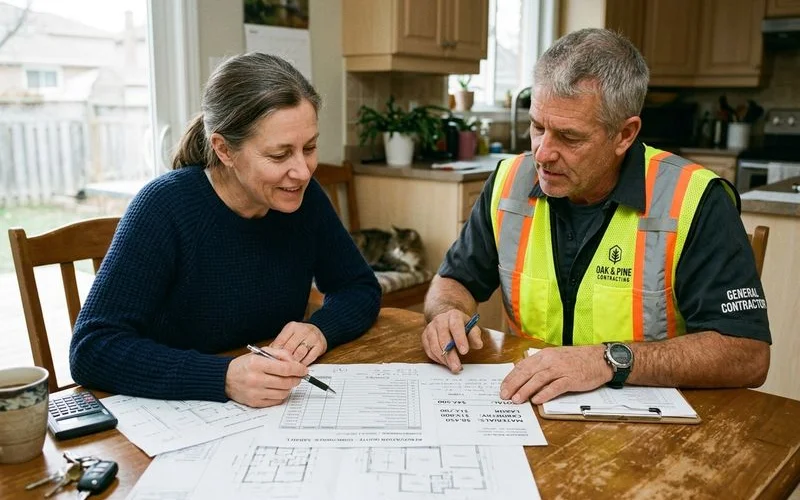
Five Factors That Drive 90% Of The Variance
Depth gained, soil conditions, lot access, perimeter length, and bundled scope are the five variables that determine where your project lands within the $80-to-$500-per-linear-foot range.
1. Depth Gain Targeted
The biggest single cost driver is your target depth. A 1-foot gain requires a $200 per linear foot baseline. Lowering by 2 feet is the most common target and averages $300 per linear foot. A 3-foot gain creates a premium ceiling height for a theatre or gym, pushing costs to $450 per linear foot.
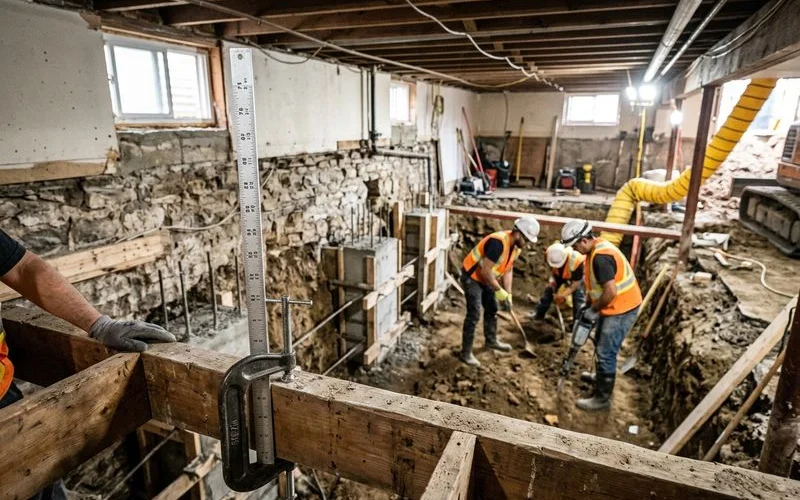
Our structural engineers mandate strict curing windows for this new concrete. Each excavated section needs a minimum of seven days to cure before the next adjacent section opens up. We cannot rush this vital structural process. Deeper digs demand more concrete and extensive shoring during excavation.
2. Soil & Site Conditions
Stable clay with consistent bearing capacity establishes the baseline price. Wet clay near ravines, the lakeshore, or high-water-table neighbourhoods adds 25 percent. Sandy or unstable soil requiring extra shoring also adds 25 percent.
We pull a soil report whenever conditions look marginal. Better to know upfront than improvise mid-project. A 2026 geotechnical soil report from firms like SoilEng in Toronto typically costs between $3,500 and $8,000. These reports analyze several critical factors:
- Soil bearing capacity and stability
- Groundwater and high-water-table risks
- Required depths for boreholes
- Structural recommendations for shoring
We rely on these laboratory tests to guarantee your foundation will sit securely. This scientific approach removes the guesswork from your estimate.
3. Access & Lot Width
Detached homes with rear-yard access represent the baseline for staging. Semi-detached properties with shared walls add a 10 to 15 percent premium for party-wall coordination and tighter staging. Row houses or narrow lots under 17 feet add a 15 to 25 percent premium.
Contractors must bring in the smallest excavation equipment or hand-stage materials for tight lots. Our crews often use specialized conveyor belts or wheelbarrows to remove dirt from narrow spaces. Heritage Conservation District properties with façade restrictions add another 5 to 10 percent.
4. Perimeter Linear Footage
This measurement defines exactly what you are paying for. A 100-linear-foot bungalow costs roughly half what a 200-linear-foot detached costs, holding everything else equal. The total cost to lower a basement depends heavily on your existing footprint. To calculate your perimeter accurately:
- Walk the exterior of your home
- Measure every single straight wall section
- Add these measurements together to find total linear feet
- Compare this final number against your property survey
We recommend double-checking this calculation before getting quotes. This step makes apples-to-apples comparisons much easier.
5. Bundled Scope
Adding waterproofing during underpinning costs $80 to $120 per linear foot incrementally. This rate is much cheaper than doing it standalone later at $150 to $250 per linear foot. Adding basement finishing typically runs $30,000 to $70,000 extra depending on the finish level.
The economics favour bundling because the trenches and slab pours are shared. Our teams install new weeping tiles and drainage pipes efficiently while the foundation is already exposed. You save significant money by combining these structural upgrades into a single timeline.
What’s Included In A Real Quote
A comprehensive quote must detail every step of the engineering and municipal approval process. A line-item Ontario underpinning quote should explicitly include these specific categories:
Pre-Construction & Engineering
- Architectural drawings (site plan, foundation plan, sections)
- Structural engineering (footing depths, reinforcement, pin sequencing, OBC sign-off)
- Engineer’s seal on all stamped drawings
- Soil report if required by the plan reviewer
Active Construction & Cleanup
- Pre-construction site protection (dust isolation walls, floor protection)
- Excavation of all pin sections in proper sequence
- Concrete and reinforcement for new footings
- Slab restoration to original or finished elevation
- Daily site cleanup during construction
Permits, Inspections & Warranties
- Building permit fees (City of Toronto or other municipality)
- Engineer’s progress inspections at scheduled intervals
- City final inspections
- Warranty documentation (written workmanship warranty)
You should expect surprise costs mid-project if your quote leaves any of these details vague. Our project managers frequently review competing estimates that simply say “permits TBD” or “engineering separate.” When comparing any underpinning price in Ontario, you must factor in building permit fees. The City of Toronto building permit fee in 2026 is $18.56 per square metre of proposed construction.
We also factor in the mandatory $56.33 fee for each new dwelling unit if you add a legal apartment. This transparency protects you from unexpected expenses.
Ontario vs Other Provinces
Ontario dictates the highest costs nationwide due to stringent engineering standards and premium labour rates.
| Province | Typical Range | Notes |
|---|---|---|
| Ontario (GTA) | $80-$500 / linear ft | Highest labour rates, strictest permitting |
| British Columbia (Vancouver) | $90-$500 / linear ft | Similar to Ontario; soil + seismic add cost |
| Alberta (Calgary, Edmonton) | $60-$350 / linear ft | Lower labour, simpler clay soil |
| Quebec (Montreal) | $60-$300 / linear ft | Lower labour, French-language permit process |
| Atlantic provinces | $50-$280 / linear ft | Lower labour, smaller market |
The GTA premium reflects skilled-trades labour costs, the City of Toronto’s engineering rigour, and dense urban contexts. Narrow lots, shared walls, and heritage overlays complicate logistics significantly.
We adhere to the Ontario Building Code, which requires extensive steel reinforcement and strict concrete testing. This level of quality control pushes prices higher than regions with simpler clay soils and lower labour rates like Alberta.
Financing The Project
Underpinning is a voluntary structural improvement, so home insurance does not cover the expense. Common financing approaches in Ontario include several reliable options:
- HELOC (Home Equity Line of Credit): Most flexible, drawn down as the project proceeds
- Renovation-specific loans: Fixed-rate, fixed-term, structured around project milestones
- Cash flow: Unusual on $30k+ projects but possible if the timing matches
- Rental ROI: When underpinning enables a legal basement apartment, the rental income covers the cost in just a few years
We see the Rental ROI approach working incredibly well right now. A 2026 rental market analysis from Rentals.ca shows a one-bedroom basement apartment in Toronto averaging around $2,150 to $2,188 per month. This substantial monthly income helps homeowners quickly pay down their HELOC or renovation loan.
We do not structure financing directly. That conversation belongs entirely between the homeowner and their lender. Our itemized quotes provide exactly what a bank requires to release project funds. You can take our paperwork straight to your branch.
Once you’ve nailed down a budget, the next decision is who actually does the work. Our companion guide on how to choose a Toronto underpinning contractor walks through the credential, warranty, and red-flag checks every quote should clear.
Provincial Cost vs Toronto-Specific Cost
This guide covers Ontario-wide cost data to give you a broad baseline. For city-specific pricing inside Toronto, the homepage covers what a local project actually runs.
Our local projects typically range from $20,000 to $50,000 for a full perimeter on a standard detached home. This sits right in the middle of the broader provincial range. You might also encounter a $2,228 Committee of Adjustment minor variance fee in Toronto if your design changes the overall property footprint.
We strongly suggest getting a site-specific assessment before making any final budget decisions. Ready to lock a fixed-price quote? Request a free estimate to get a typical response within two business hours.
Our engineered assessment is built right in. Reach out today to start transforming your basement into valuable living space.